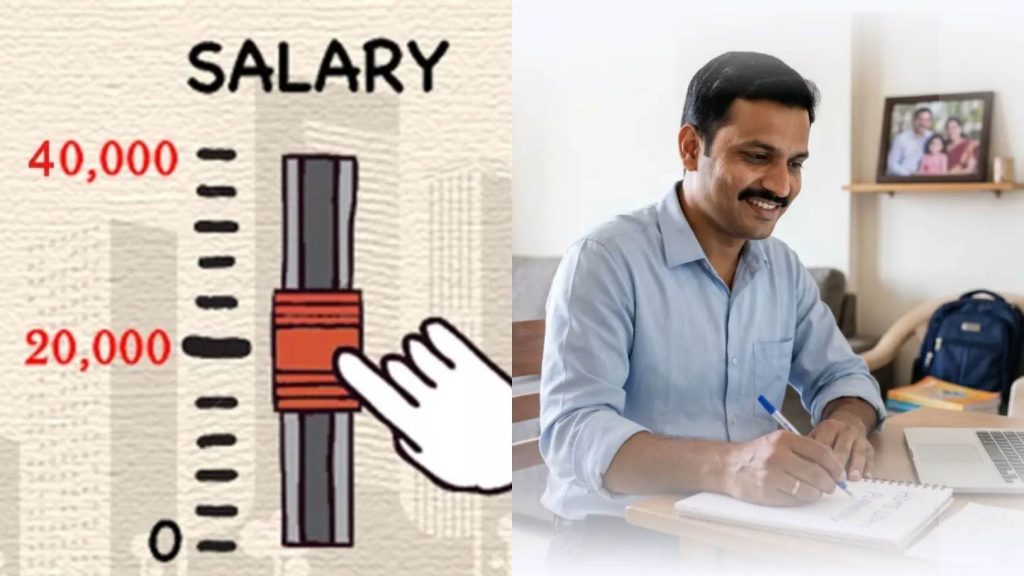
On a ₹40,000 monthly salary, you can typically borrow around ₹4 lakh to ₹9 lakh as a personal loan, depending on your credit score, existing EMIs, and lender.
Most lenders sanction 10 to 24 times your monthly income, capped by an EMI you can comfortably afford. A clean profile pushes you toward the higher end, while active debt pulls it down. Secured loans can fetch far more.
How Much Personal Loan Can I Get on a ₹40,000 Salary?
A ₹40,000 salary clears the income bar at almost every bank and NBFC, so eligibility is rarely the problem. The real question is the amount, and that depends on your profile.
Lenders estimate a range of ₹3 lakh to ₹8 lakh for this salary, though a strong applicant can reach higher. Here is a realistic snapshot.
| Borrower profile | Estimated loan amount |
|---|---|
| Strong (CIBIL 750+, no existing EMIs) | ₹8 lakh to ₹9 lakh |
| Average (CIBIL 700+, small existing EMIs) | ₹4 lakh to ₹6 lakh |
| Weak (low score or high existing EMIs) | ₹1 lakh to ₹3 lakh |
Why the wide spread? Because two people on the same salary carry different risk. The one already paying a ₹10,000 car EMI has far less room for a new loan than someone debt-free. Knowing your bracket helps you apply where you are likely to be approved, which protects your credit score from needless rejections.
How Is Loan Eligibility Calculated on ₹40,000 Salary?
Lenders use two methods, then pick the lower result. Understanding both tells you exactly why your sanction letter shows the number it does.
1. The multiplier method. Your loan is set as a multiple of net monthly income. Indian lenders commonly apply 10 to 24 times your salary. On ₹40,000, that spans ₹4 lakh at 10x to ₹9.6 lakh at 24x.
2. The FOIR method. FOIR, or Fixed Obligation to Income Ratio, checks how much of your income already goes toward EMIs and fixed dues. Most lenders want your FOIR to stay within 40% to 50% for a personal loan.
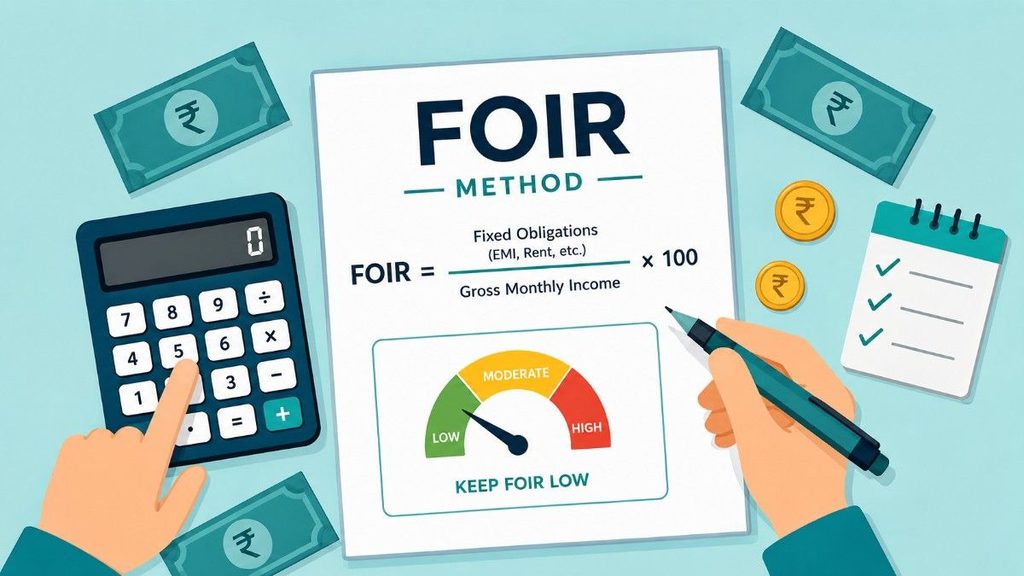
Here is how it works in practice. At a 50% cap, ₹20,000 of your ₹40,000 salary can service EMIs. If you already pay ₹8,000 in EMIs, only ₹12,000 is left for a new loan, which shrinks your eligibility sharply.
State Bank of India, for example, considers up to 24 times net monthly income while keeping the EMI-to-income ratio in check under its Xpress Credit range. This matters because clearing a small existing EMI before applying can unlock a noticeably larger loan.
How Much EMI Can I Afford on a ₹40,000 Salary?
Your safe EMI ceiling is roughly ₹20,000, following the 50% FOIR rule most lenders prefer. Staying below that keeps daily expenses and emergencies covered.

Tenure is the lever that decides your monthly outgo. The table below shows illustrative EMIs on a ₹5 lakh loan at about 11.5% per annum.
| Tenure | Monthly EMI | Total interest paid |
|---|---|---|
| 3 years | ₹16,488 | ₹93,568 |
| 5 years | ₹10,996 | ₹1,59,778 |
| 7 years | ₹8,693 | ₹2,30,231 |
The trade-off is clear. A longer tenure lowers the EMI but raises total interest. Stretching a ₹5 lakh loan from 3 to 7 years cuts the EMI by nearly half, yet you pay over ₹1.3 lakh more in interest.
Practical example: Rohan earns ₹40,000 with no active loans. An ₹8 lakh loan over 5 years costs about ₹17,594 a month, which fits under his ₹20,000 ceiling. If he already paid a ₹9,000 EMI, that same loan would breach his FOIR and get trimmed.
Loan Options Available on a ₹40,000 Monthly Salary
A personal loan is the fastest unsecured option, but it is not the only one. Secured loans use an asset as collateral, which usually means larger amounts and lower rates.
| Loan type | Security | Typical suitability on ₹40,000 |
|---|---|---|
| Personal loan | None | ₹4 lakh to ₹9 lakh, quick and flexible |
| Two-wheeler loan | The vehicle | Small ticket, easy approval |
| Consumer durable loan | The product | Phones, appliances, no-cost EMIs |
| Car loan | The car | Mid ticket, tenure up to 7 years |
| Gold loan | Your gold | Fast cash against jewellery |
| Home loan | The property | Largest amount, longest tenure |
The takeaway: if you need a big sum and can pledge an asset, a secured loan often beats a personal loan on both size and rate. For urgent, unplanned needs, the personal loan wins on speed.
What Affects Loan Eligibility on a ₹40,000 Salary?
Salary opens the door, but several factors decide how much walks through it. Each one is a place where you can help or hurt yourself.
- Credit score: A CIBIL score of 700 or above is preferred, and 750 plus usually earns the lowest rates.
- Existing EMIs: Every active EMI eats into your FOIR and reduces the new amount you qualify for.
- Employer profile: Government, PSU, and reputed private employees often get better terms due to job stability.
- Age and remaining service: More working years left means longer tenure options and higher eligibility.
- Banking relationship: A salary account with the lender can bring pre-approved offers and lighter paperwork.
Why this matters: these levers are often more controllable than your salary. Fixing even one, like closing a small EMI, can move your sanctioned amount up.
Interest Rates and Charges You Should Expect
The advertised rate is only part of the cost. Processing fees, taxes, and prepayment charges all add up, so compare the full picture before signing.
| Lender | Interest rate (p.a.) | Processing fee |
|---|---|---|
| SBI | from about 11.45% | up to 1.5% |
| HDFC Bank | 9.99% to 24% | up to ₹6,500 plus GST |
| ICICI Bank | starting 9.99%, up to 16.5% | up to 2% plus taxes |
| Axis Bank | from 9.99% | up to 2% |
Your actual rate depends on your credit score, employer, and income, so treat these as starting points, not guarantees.
Know your rights. Since October 1, 2024, the RBI requires every lender to give you a Key Facts Statement before you sign. It shows the all-inclusive Annual Percentage Rate and every charge in a simple, standard format. This matters because a low headline rate can hide a high effective cost once fees are added, and the APR lets you compare lenders honestly.
How to Increase Your Loan Eligibility
You do not need a raise to borrow more. A few deliberate moves before you apply can widen your eligibility.
- Clear small existing debts: Paying off a minor loan or credit card balance lowers your FOIR and frees up room for a bigger EMI.
- Add a co-applicant: Combining income with a spouse, parent, or sibling raises your joint eligibility.
- Choose a longer tenure: A longer term reduces the EMI, which helps you fit under the FOIR cap.
- Improve your CIBIL score: Pay bills on time and keep credit usage low for a few months before applying.
- Apply where you bank: Salary-account holders frequently receive preferential rates and quicker approvals.
Try one at a time and check offers, rather than applying everywhere at once, which can dent your score.
Documents Needed to Apply For a Loan
Keeping documents ready speeds up approval, which for many lenders can be within 24 hours of meeting the criteria.
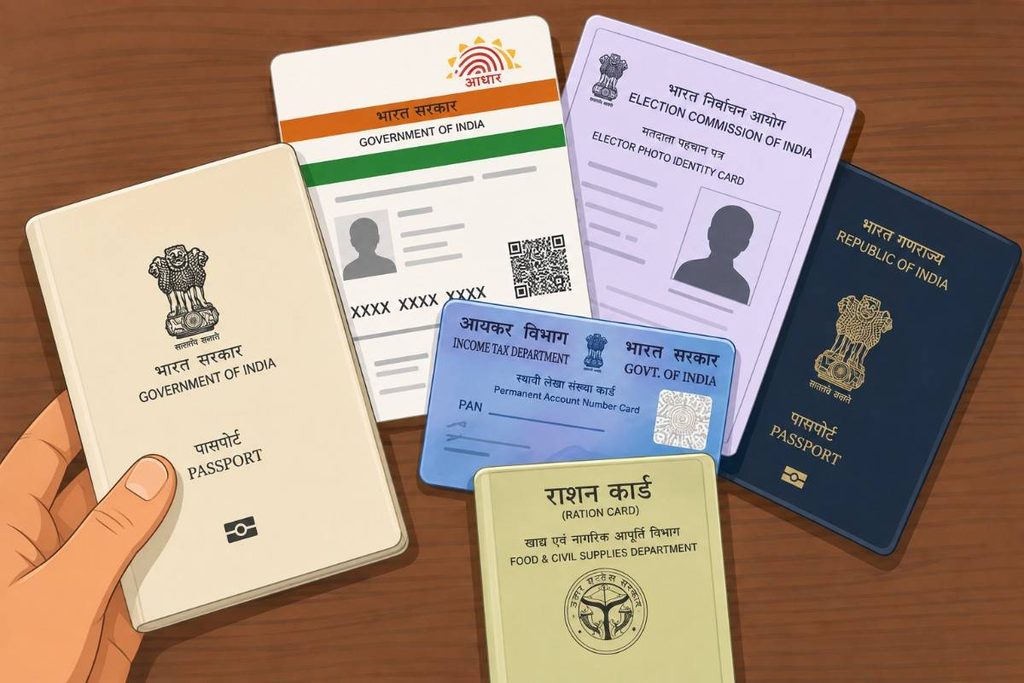
Salaried applicants on ₹40,000 typically need:
- Identity proof: PAN card, Aadhaar, passport, or voter ID.
- Address proof: Aadhaar, utility bill, rent agreement, or passport.
- Income proof: Last 3 months of salary slips.
- Bank statements: Last 3 to 6 months of your salary account.
- Employment proof: Offer letter or employee ID, if asked.
Some NBFCs offer loans even without salary slips or ITR for anyone earning at least ₹25,000 a month, which helps informal-sector earners. Accurate, matching details across documents reduce the chance of delays or rejection.
Conclusion: A ₹40,000 Salary Can Fetch Roughly ₹4 lakh to ₹9 lakh
Your exact loan on a ₹40,000 salary comes down to three things you can influence: your credit score, your existing EMIs, and the tenure you choose.
Clear small debts, keep your FOIR under 50%, and apply where your profile fits to reach the higher end of the range.
Always read the RBI-mandated Key Facts Statement, compare the APR across lenders, and borrow only what your monthly budget can comfortably repay.
FAQs
Yes. Several NBFCs sanction loans using bank statements alone, since some lend without salary slips or ITR to those earning ₹25,000 or more. Rates may be slightly higher than at banks.
Most base eligibility on net monthly income, the amount credited after deductions. This is why your take-home figure, not your CTC, drives the FOIR calculation and your final loan amount.
Yes. Each application triggers a hard inquiry, and several in a short span can lower your credit score and signal desperation. Compare offers first, then apply to one or two best-fit lenders.
For pre-approved or salary-account customers who meet all criteria, disbursal can happen in as little as 24 hours. Fresh applicants with full document checks may take a few days.