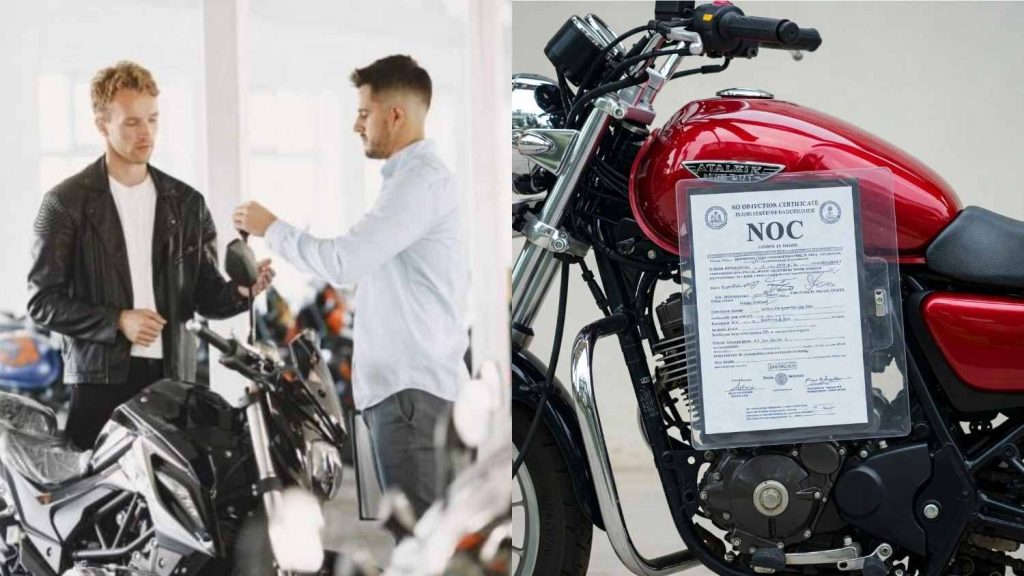
A No Objection Certificate (NOC) for a bike loan is a document your lender issues once you repay the loan in full. It confirms the lender has no further financial claim on your two-wheeler. You need this NOC to remove hypothecation from your RC and to sell, transfer, or re-register the vehicle freely.
What Is an NOC for a Bike Loan?
An NOC, or No Objection Certificate, is a formal letter from your bank or NBFC stating that your bike loan account is closed and the lender has withdrawn its financial interest in the vehicle.
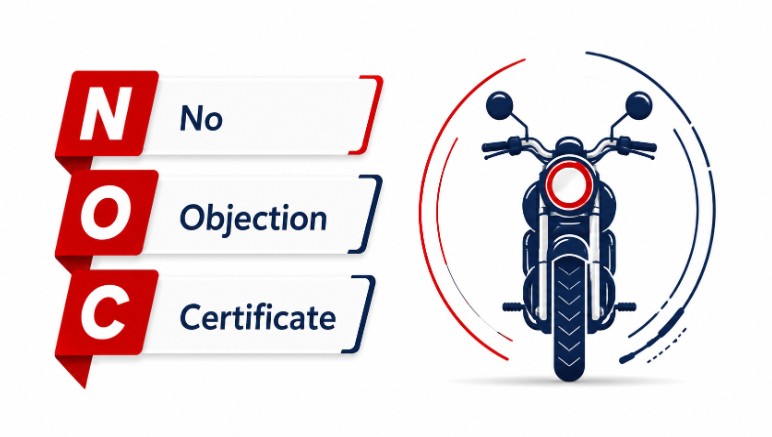
When you finance a bike, the lender registers itself as a co-owner on the Registration Certificate (RC) through hypothecation. This is what makes it a secured loan, since the vehicle itself backs the debt, unlike an unsecured loan where no asset is pledged.
The NOC is proof that this financial charge no longer exists. Without it, the RTO will not update your RC, even though your EMIs are fully paid.
Why Is a Bike Loan NOC Important?
Skipping the NOC step feels harmless right after loan closure, but it creates real problems later. Here is why it matters.
- Ownership clarity: Your RC still shows the bank’s name until hypothecation is removed, so you are not the sole legal owner on paper.
- Resale ease: Buyers and used bike platforms almost always ask for the NOC before finalising a purchase.
- Insurance and claims: Some insurers cross-check hypothecation status during claim settlement, especially for total loss claims.
- Future loans: An unremoved hypothecation entry can confuse credit assessments if you apply for another vehicle or personal loan later.
- Regulatory protection: Delayed release of these documents by lenders is now directly penalised under RBI’s Fair Practices Code directions, so borrowers have a formal recourse if the bank drags its feet.
When Do You Get an NOC After Bike Loan Closure?
You become eligible for the NOC only after your loan account shows a zero balance and all charges, including any foreclosure fee, are cleared.
Under RBI’s directions dated September 13, 2023, regulated lenders must release all original movable property documents and remove registered charges within 30 days of full repayment or settlement. This applies to closures falling on or after December 1, 2023.
If the lender misses this window and the delay is on their end, they must pay compensation of ₹5,000 per day of delay. In practice, most banks issue the NOC within a couple of weeks, though timelines vary by lender and branch workload.
This 30-day rule matters because it gives you a clear, enforceable timeline instead of an open-ended wait. You can escalate through the bank’s grievance cell if the deadline passes without any communication.
How to Get NOC for a Bike Loan: Step-by-Step Process
Getting your NOC is mostly a formality once the loan is closed, but following the right sequence avoids back-and-forth delays.
1. Confirm loan closure: Check your loan account statement or app to verify the outstanding balance is zero and no EMI is pending.
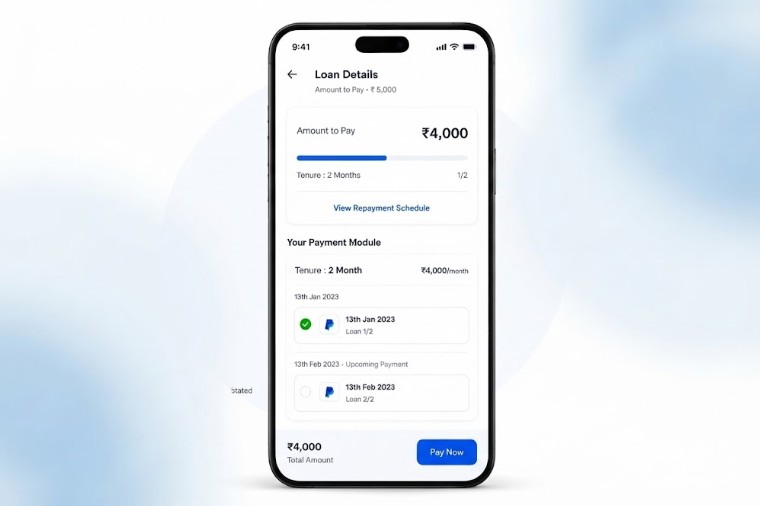
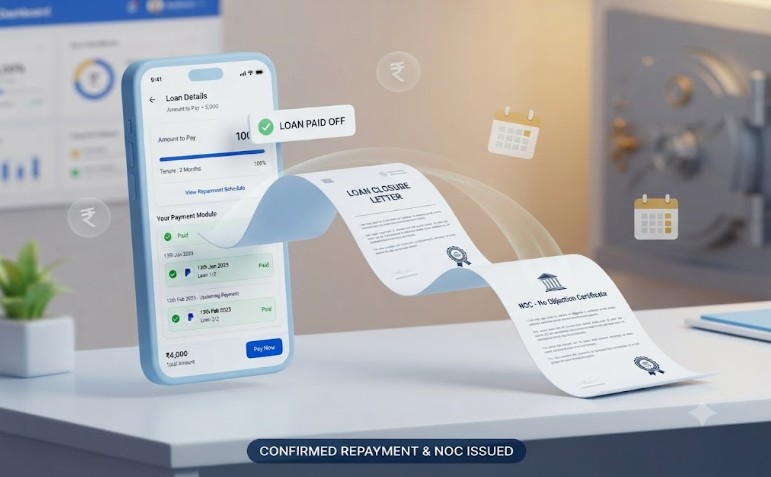
2. Request the loan closure letter: This confirms repayment in writing and is often issued alongside or just before the NOC.
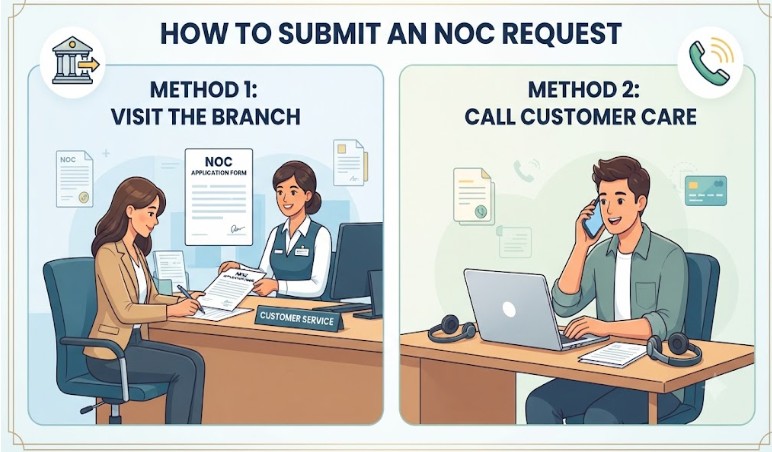
3. Submit an NOC request: Visit the branch, call customer care, or raise a request through net banking or the lender’s app.
4. Verify your details: Double check your name, RC number, chassis number, and engine number match your registration papers exactly.
5. Collect the NOC and Form 35: Most lenders hand over both together, since Form 35 is needed for the RTO step that follows.
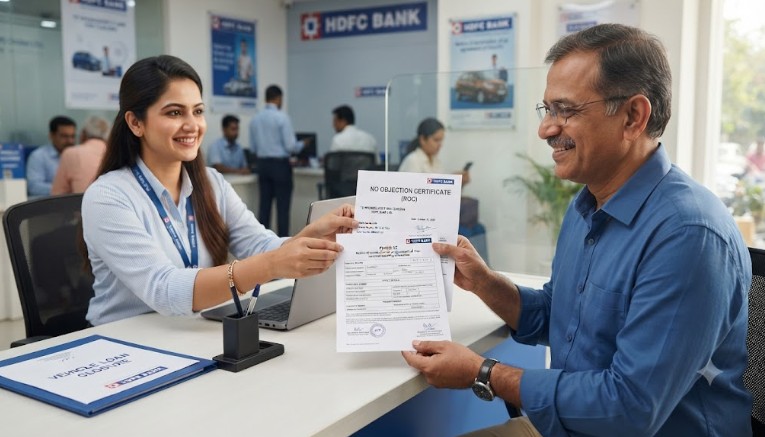
6. Keep digital and physical copies: Scan the documents immediately so you have backups if the original gets misplaced later.
Documents Required For a Bike Loan NOC
Keep these ready before you approach your lender, since incomplete requests are the most common reason for delay.
| Document | Purpose |
|---|---|
| Loan account number | Identifies your specific loan for the request |
| RC copy | Confirms vehicle details match lender records |
| Identity proof (PAN, Aadhaar) | Verifies you are the registered borrower |
| Final EMI or foreclosure payment receipt | Proves the account is genuinely closed |
| Address proof | Needed if the NOC is to be couriered |
What to Do After Receiving a Bike Loan NOC?
Getting the NOC is not the finish line. A few follow-up steps protect you from disputes down the road.
Check the NOC carefully for your name, RC number, chassis number, and the date of loan closure. Any mismatch can cause rejection at the RTO stage.
Note the validity period, since many lenders issue NOCs valid for around 90 days, after which you may need a duplicate copy from the SPN source. Plan the hypothecation removal within that window.
It also helps to confirm nothing else is outstanding against your name before you move on, since a stray charge elsewhere can complicate future borrowing. You can check active loans in your name to be sure your credit profile reflects the closure correctly.
How to Remove Hypothecation From Bike RC After Loan Closure?
The NOC alone does not update your RC. You still need to apply to the RTO to formally remove the hypothecation entry.
According to Parivahan, the official government portal, termination of hire purchase or hypothecation requires Form 35 signed by both the registered owner and the financier, along with a certificate of due clearance and the prescribed fee under Rule 81 of the Central Motor Vehicle Rules, 1989.
Here is the typical online process:
1. Visit the Parivahan Sewa portal and select Vehicle Related Services for your state.
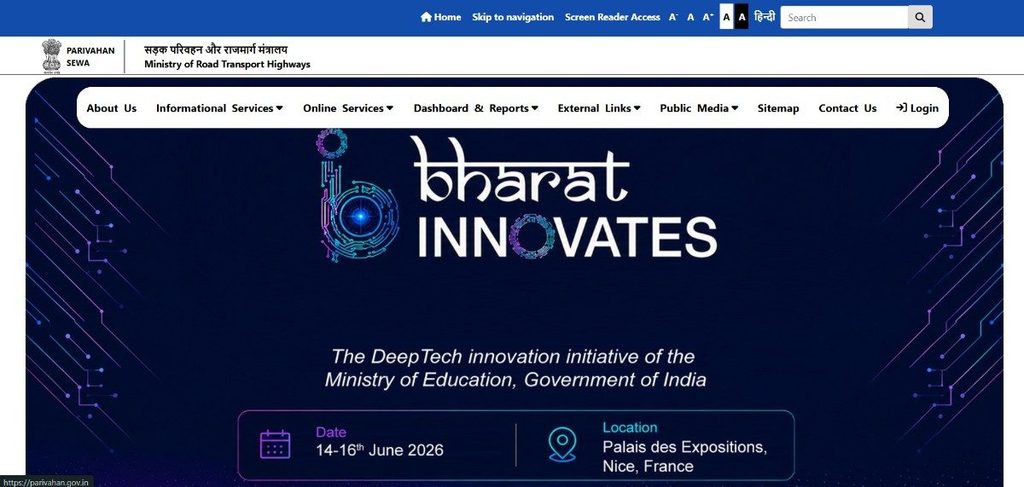
2. Enter your registration number and the last five digits of the chassis number, then verify via OTP.
3. Select the Hypothecation Termination option and enter the termination date.
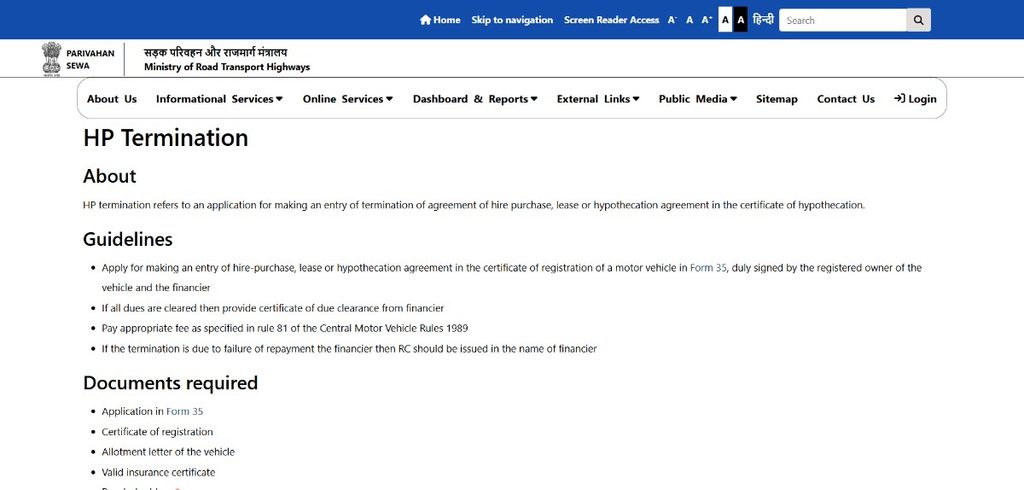
4. Upload scanned copies of Form 35, the bank NOC, RC, insurance, and PUC certificate.
5. Pay the applicable RTO fee online, which typically ranges from about ₹100 to ₹500 depending on the state.
6. Book an RTO appointment if physical verification is required in your state.
7. Track the application and collect the updated RC once approved.
If your state RTO does not support the fully online route, you can still submit the same documents physically at the counter.
Documents Required for Hypothecation Removal
| Document | Notes |
|---|---|
| Form 35 (in duplicate) | Signed by both financier and owner |
| Original bank NOC | Must be within its validity period |
| Loan closure letter | Confirms full repayment |
| Original RC | Physical copy for RTO reference |
| Valid insurance certificate | Must be active on the application date |
| Valid PUC certificate | Required in most states |
| Identity and address proof | PAN, Aadhaar, or equivalent |
| Chassis and engine pencil print | Required by some RTOs for verification |
How to Check Bike Loan NOC Status?
If your NOC request is taking longer than expected, you have a few ways to track it.
- Log in to net banking or the lender’s mobile app and look for a loan closure or document tracking section.
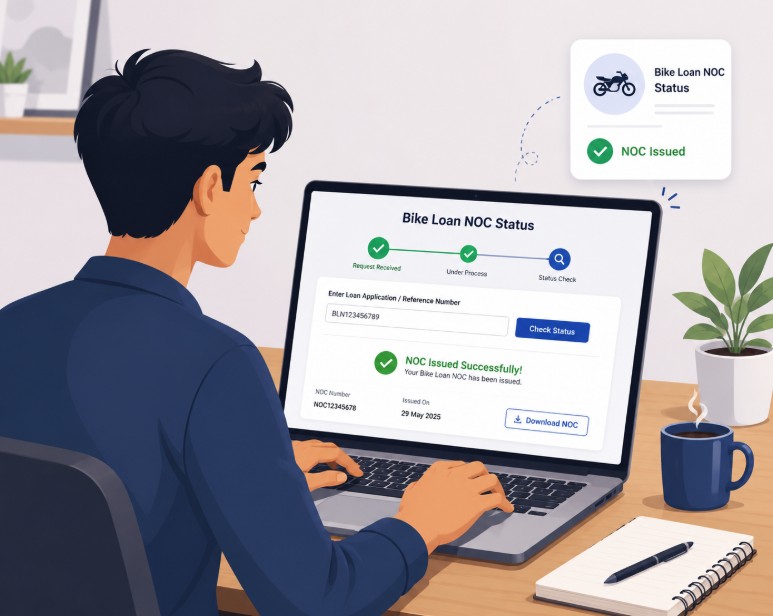
- Call the lender’s customer service and quote your loan account number.
- Visit your home branch with your closure receipt if digital tracking is unavailable.

Since NOC tracking works similarly to other loan status checks, it helps to understand the general approach for how to check loan status across different lenders before you start following up.
Once your hypothecation removal application is filed separately at the RTO, you can track that on the Parivahan portal using your application or acknowledgement number.
What to Do If You Lose or Do Not Receive Your Bike Loan NOC?
Losing the NOC or not receiving it within the expected window is stressful, but it is usually fixable.
If it has been over 30 days since full repayment with no NOC and no explanation, escalate through your lender’s grievance redressal cell first. This step is required before RBI’s compensation clause applies.
If you have already lost a previously issued NOC, request a duplicate copy from the same branch. Most lenders reissue it after verifying your closure records, sometimes for a small administrative fee.
Keep every email or letter you send as a record. If the bank remains unresponsive beyond the RBI-mandated window, you can approach the Banking Ombudsman with your correspondence as evidence.
Bike Loan NOC vs Loan Closure Certificate: What’s the Difference?
These two documents are often confused, but they serve different purposes.
| Aspect | Loan Closure Certificate | Bike Loan NOC |
|---|---|---|
| What it confirms | That the loan balance is fully repaid | That the lender has no further claim on the vehicle |
| Used for | Personal record and credit proof | RTO hypothecation removal, resale, insurance |
| Issued when | Immediately after final payment | Along with or shortly after the closure letter |
| Required by RTO | Not directly required | Mandatory for hypothecation termination |
Conclusion: Getting Your Bike Loan NOC Promptly Protects Your Ownership Rights
Closing a bike loan is only half the job. The NOC and the hypothecation removal that follows are what actually transfer full, undisputed ownership back to you.
Request the NOC as soon as your last EMI clears, verify every detail on it, and complete the RTO formalities within the document’s validity period so your RC reflects reality and your bike stays hassle-free to sell, insure, or transfer whenever you choose.
FAQs
Yes. It is the only document that proves the lender’s financial claim on the vehicle has ended, and it is required to remove hypothecation from the RC.
Many lenders now issue NOCs digitally through net banking, mobile apps, or email once the loan account shows zero balance.
Under RBI rules, lenders must release the document within 30 days of full repayment, though several banks issue it sooner.
It is technically possible, but most buyers and dealers will refuse the deal since the RC still shows the lender’s hypothecation entry.
No. The closure certificate confirms repayment, while the NOC specifically releases the lender’s legal claim on the vehicle.